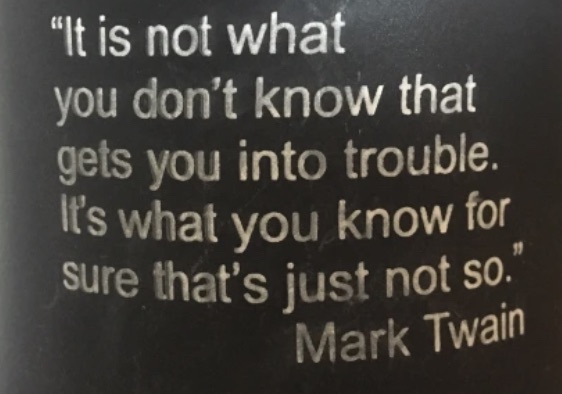
Knowledge is fluid.
But I think when most of us learn something, we commit to that bit of information as static fact and never really explore that there may be new, conflicting even, information that changes the picture.
In 2008, when my daughter was 9, she was diagnosed with pityriasia rosea (PR), a not uncommon rash that typically occurs once, makes you sick for a few weeks and then is gone, never to return.
She had a severe case covering her entire body from the neck down. The sickness (fatigue, fever, nausea, all over achy) lasted about 8 weeks, the rash lasted 8 months and became hypopigmented (light). Easy diagnosis – no specific treatment.
All of this is normal PR.
However the next year, it came back – milder, but still, it returned. At which time, we found out that in a very small percentage of cases, it will return regularly.
Over the years she has had numerous rashes, most of which have been written off or identified as something that isn’t a big deal.
It’s been 15 years since the initial PR outbreak and we are finding new information that conflicts with what we’ve been told in the past.
She currently has a few patches that are clearly PR, but she also has other patches that looks very different.
PR normally shows as pink, oval, lesions with scaling on the edges. We are now learning that it can show as small vesicular or follicular spots (sort of an acne look), small red round spots like papura or petechiae, welts or hives.
That’s what’s she has – all of it. She even has one on her thumb we initially thought was a blister that just never went away.
Below are two article (one published in 2017, the other in 2024) in the National Library of Medicine discussion the Clinical Variants of PR.
https://www.ncbi.nlm.nih.gov/pmc/articles/PMC5480068/
https://www.ncbi.nlm.nih.gov/books/NBK448091/
Had I not been looking for information about recurrent PR, I never would have stumbled across these articles and would not have known that the other rashes are part of it.
I’ve also learned that it is caused by a viral infection. So we can add anti-viral healing methods into the routine.
Here’s the thing though, most doctors have no clue that there are PR variants. So they have diagnosed her incorrectly many times.
Sound familiar?
Doctors are taught that Lyme & other tickborne illnesses are easy to diagnose and easy to treat. Most never consider that there may be more to the story. They hold on to what they’re taught.
How do we keep from becoming static in our thinking?
- Ask questions.
- Seek to expand your understanding.
- Look for conflicting ideas and theories.
- Consider that you might be wrong.
And if your doctor isn’t willing to take that ride too, they may not be the right person to help you get through whatever issue you’re battling.
Stay fluid friends.
 PhilippiJoy