“Increased your perspective on what’s going on in your body.”
Dr. Eric Gordon
We think of traumatic brain injuries (TBI’s) as something that happens to football players and war veterans.
But did you know that they also happen when there is a traumatic event such as abuse, rape, and even chronic sickness?
Millennium Health
- Acute Inflammation: A natural, temporary immune response that facilitates healing.
- Chronic Inflammation: Persistent production of pro-inflammatory cytokines, causing further damage and impairing the body’s reparative mechanisms. Research shows elevated cytokine levels can persist for up to 17 years post-injury.
TBI’s are common in tick borne disease, especially in patients who have been sick a long time.
The link below is to a presentation by Dr. Mark Gordon (neural endocrinologist who has dedicated his career to TBI’s) and discussion with Dr. Eric Gordon (Lyme specialist – one of the primary doctors at the center I go to).
A lot of this is a little over my head. But there is also a ton of great information and gives a solid understanding of what a tbi is and how it can affect us.
“Neural endocrinology examines the relationship between the nervous system and brain-produced hormones that govern functionality. Research shows inflammation as a primary damaging factor in neuropsychiatric conditions, from depression and anxiety to Alzheimer’s, Parkinson’s, and multiple sclerosis. Of particular focus is subconcussive brain injury—a condition that develops without immediate symptoms, unlike conventional concussive injuries seen in athletes.
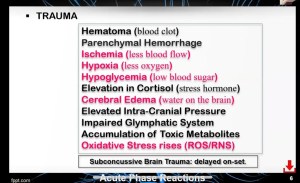
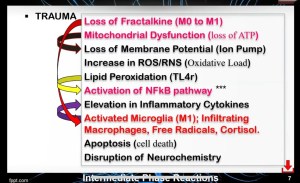
Mark Gordon’s research demonstrates how these traumas trigger a sequence: primary injury leads to neuroinflammation (secondary injury), disrupting the balance between brain hormones, immune system function, and brain chemistry.”
In this presentation, Dr. Mark explains what a secondary concussion is and how it affects the body:

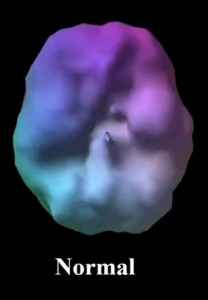
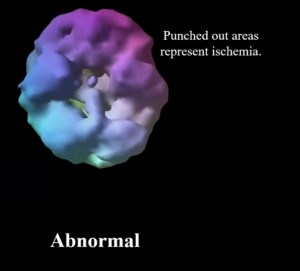
Dr. Daniel Amen uses a nuclear medicine test called a spect scanner to show blood flow through the brain. Below is the diffeeence between a normal brain and one with TBI.


You can watch the full presentation & discussion here:
Neuroinflammation & Subconcissive Injury – A Neuroindocrine Perspective
Info from the Q & A:
Neurotransmitters in the Brain
There is no means to directly measure neurotramiter production in the brain unless we do a spinal tap or brain biopsy.
However, when there’s neuroinflammation, there is a block of communication between the hypothalamus and the pituitary, so you lose FSH & LH. Measuring these gives a reference to brain function.
There are also surrogate markers.
For example: dopamine has an inverse relationship to dopamine – when prolactin goes up, dooamine goes down. In this case, treatment with pregnenalone may resolve symptoms.
Urinary transmitters show what the kidney produces and while there is some correlation, it does not accurately show what the brain produces.
Omega 3’s
Dosing for dha, epa, etc can be found in the book “When Brains Collide by Colonel Michael Reed. He gives a thorough breakdown of doses for different types of injuries.
HBOT
Hyperbaric chambers (HBOT) are extremely helpful, but you also have to fix the chemistry. If you don’t fix the chemistry, symptoms will return when you stop the hbot use.
Acute Head Injury
What to do after acute head injury?
ER visit after slip and fall will do a CT or MRI to make sure there is not structural damage or bleeding, amd then they’ll monitor for symptoms.
Dr. Mark runs initial blood test and starts on neuteaceutical protocol to reduce inflammation, then he retests to make sure it’s working.
Depending on injury, cranial sacral therapy may help.
Aromatase Inhibitors
Aromatase inhibitors (drugs to treat hormone receptive positive breast cancer) influence 8 systems in the brain negatively. Estradiol is important for neuroplasticity, endothelial nitric oxide synthetase, nitric oxide production in the blood, affects the libido center, affects growth hormone production in the brain, affects Igf-1 growth factor below the neck / in the liver, helps the lining of the arteries, protects the heart. If you use an estradiol blocker, you block all that.
Miscellaneous Info
Use a natural anti inflammatory (not ibuprofen, NSAIDs). Recommendations: curcumin and turmeric. D3 and quercetin for ATP enhancement and cell production.
6 mushrooms to help reduce neuroinflammation: (Neural Shield) – lions mane, turkey tail, chaga, reishi, cordyceps, maitake. I take Stamets7 daily which contains all of these.
2 cups real cacao daily will increase the release of bone marrow stem cells, which helps modulate and improve cellular function.
Red light inactivates cytokines.
Tinnitus is also caused by neuroinflammation.
There are 53,000 articles regarding the effects of neuroinflammation on insomnia.
Take the Brain Health Assessment
 PhilippiJoy