In the movie Zero Dark Thirty, interrogators use various methods to extract information from suspected terrorists. One of those methods is loud music and bright lights. Imagine how awful that would be, especially for an extended period of time. Imagine the headache, the way you might shrug up your shoulders trying to drown out the sound, squinting or closing your eyes tight to block the light.
Overwhelming, isn’t it?
That’s one picture of what life is like for a HSP. Highly Sensitive People take in normal lights and sounds at such an extreme level that it can literally feel like torture at times.
A light brush of wind or touch from a passing stranger can feel like a burning Brillo pad.
A room of people – large or small – with multiple voices coming from different directions can seem like a frantic crowd trying to escape a burning building. There is confusion, fear, and panic.
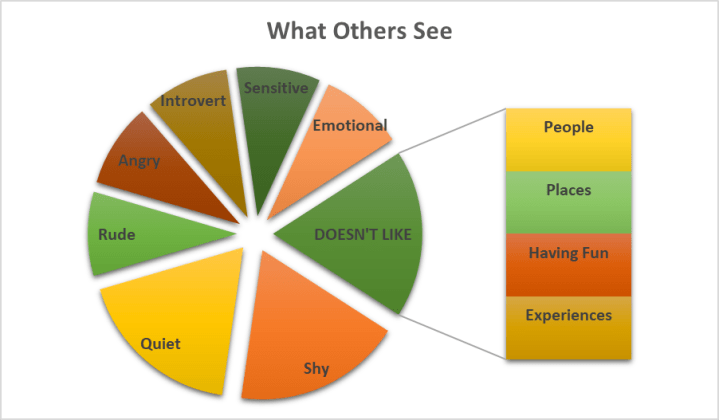
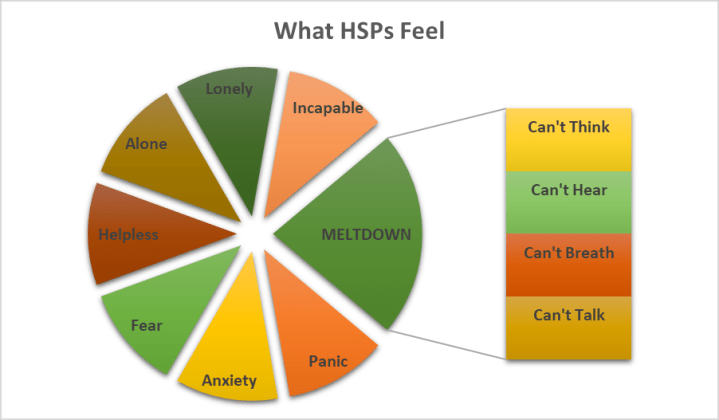
An HSP nervous system is simply more sensitive than most. Everything is absorbed at a deeper level but the brain doesn’t process any faster so eventually, the HSP will shut down – or cry, scream, shake, covering their ears and closing their eyes – desperate to make the overload stop.
When someone with Autism experiences these types of overload meltdowns, they are somewhat accepted because we are starting to understand this is part of Autism. But HSP by itself is not as well known, so when someone who is not autistic has a similar meltdown we think of them as broken, or unstable.
The reality is, HSPs on overload haven’t yet learned how to manage the environment around them. When they are able to do that, they have the ability to live a more rich, meaningful life than most – the key is understanding.
There are a great deal of benefits to being HSP – I’ll discuss those in my next post, but for now, if this sounds familiar to you – either because you or someone you care about has these experiences – know you’re not alone.
HSP is not a disease or a disorder – it is a trait that is misunderstood in our society.
 PhilippiJoy
One thought on “Highly Sensitive – What Sensory Overload Feels Like”